Meet Amaris Cruz-Guerrero | Artist and Cook


We had the good fortune of connecting with Amaris Cruz-Guerrero and we’ve shared our conversation below.
Hi Amaris, why did you decide to pursue a creative path?
I had a moment when it became really clear that being an artist was what I needed to do- not in some righteous way but, I had the desire to make my memories and intense yearnings tangible. I studied Art, Art History and Religious Studies in college. Prior to that, I wanted to be a ballerina. My family really nurtured my reveries. My mom was my first dance teacher and my dad pushed my sisters and I to learn how to play instruments. I grew up with my grandmother constantly singing in the house. I don’t think they ever thought I would be anything else but an artist.
Please tell us more about your art. We’d love to hear what sets you apart from others, what you are most proud of or excited about. How did you get to where you are today professionally. Was it easy? If not, how did you overcome the challenges? What are the lessons you’ve learned along the way. What do you want the world to know about you or your brand and story?
I draw my artistic practice around my ecological, domestic and ancestral landscapes. I grew up between Miami and Puerto Rico. For me, home is mysterious and mythic. My work engages with stories, mysticism, folklore, and the “in-betweenness” or la tierra entre medio, of my heritage. This concept as “nepantla”, a Nahuatl word which means “in the middle of it”. It was through focusing on family folklore, trying to learn about myself, that allowed me to explore these gaps, spaces in the shadows.
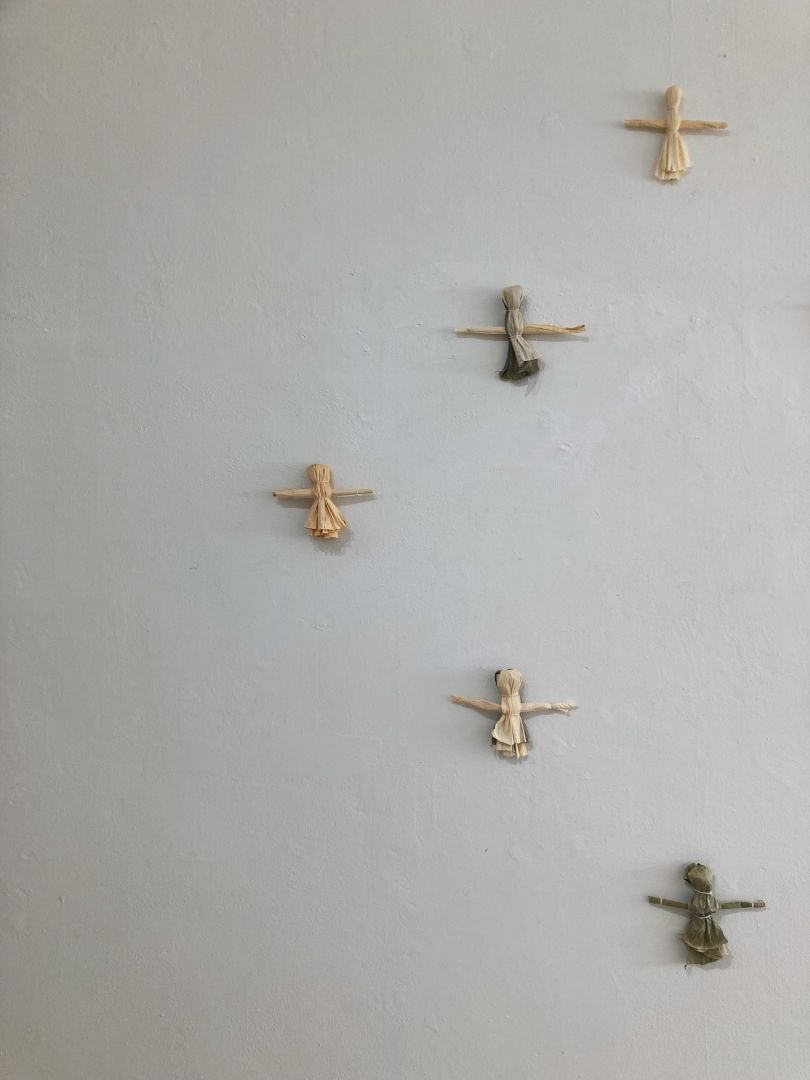
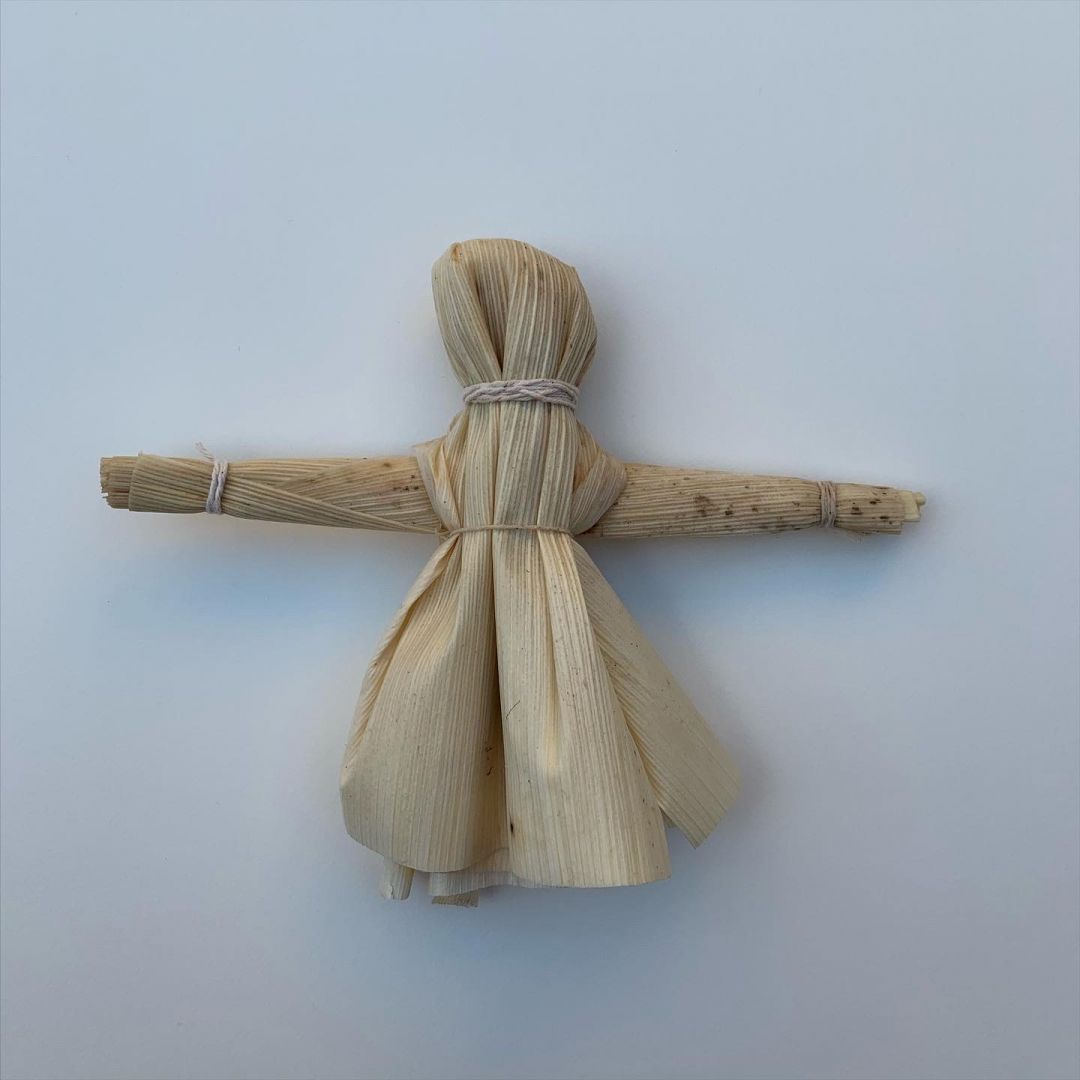
I explore female exhaustion within the familial sphere, the collective and transcendental memory and language. I combine these intimate experiences with traditional tools for communication within my Mesoamerican and Caribbean heritage by creating memorialized moments in time with sculpture, poetry and performance as an artistic medium and practice. I am interested in expressing this through the ephemeral, through cooking for people, eating with people as well as fabricating something with my own hands. For example, these cornhusk dolls that I make- they have taken an identity that is entirely their own.
Like many young brown girls, I was raised with the expectation of learning how to cook. My mom and dad both taught me how to cook. I grew up in a very traditional household. At first, this was very difficult for me– I felt very distant from other girls my age, feeling like I was too involved in domestic life. But my parents at the time worked all day and would come home late. It was easier for my sisters and I to cook so they can come home to a hot meal. Later on I accepted the fact that I actually liked cooking– that I loved it. And my sisters ended up letting me take the lead.
My need to create, to cook, comes from two places: the need to nurture, the need to heal. I grew up cultivating this relationship with nature. Plants are our first ancestors on earth, physically. The process of relating to nature, becomes a communion. The first thing I ever planted were gandules, or pigeon peas which grow back at our home in Puerto Rico. My dad and I planted this in our first house in Miami. It also comes from a place to relieve emotions. As someone who was really quiet and shy growing up, I found so much comfort in recreating family recipes. The aromas of specific dishes had the power to evoke the past. This particularly stemmed from my mother who used food to narrate and remember the memories of her family. Some of them are more painful than others. She taught me this was a form of magic. Whatever I
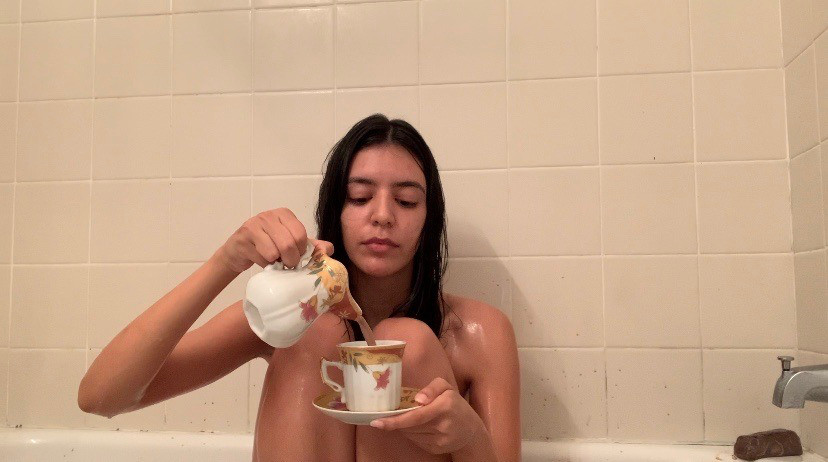
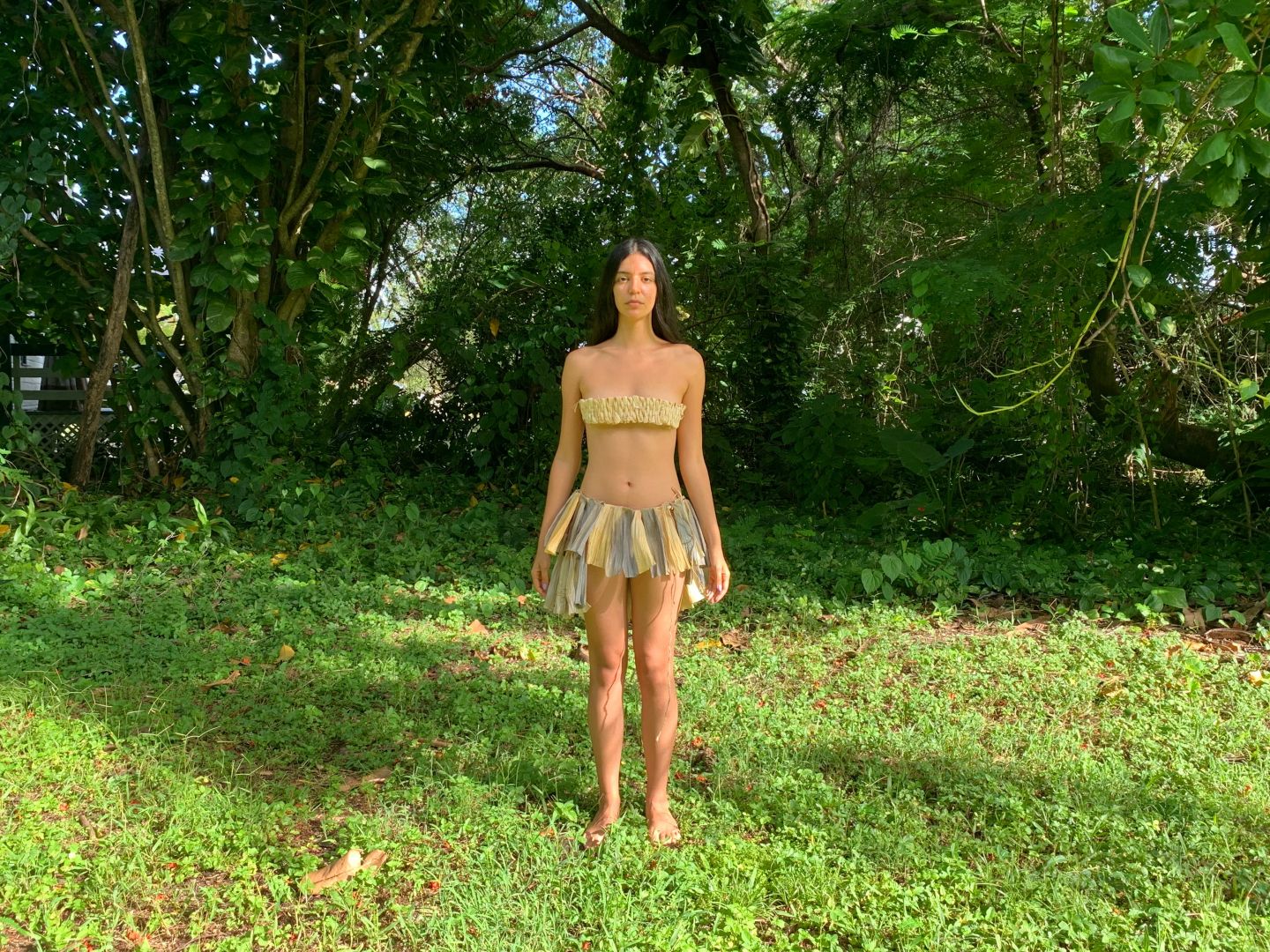
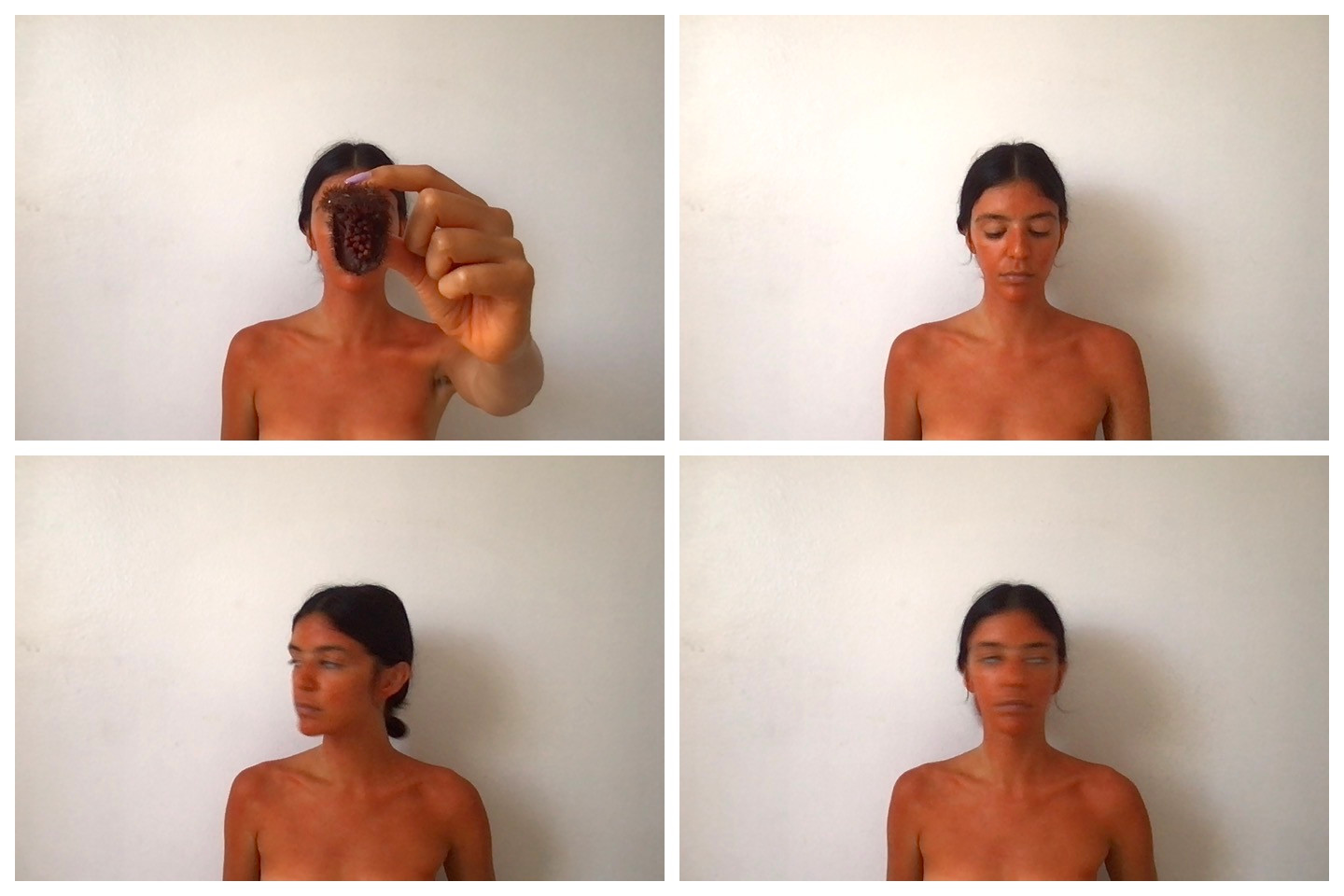
was feeling, whatever she was feeling, could influence what we were eating– so we had to be careful. This found its way through making works like “My House Smells like Chilies and Chocolate”, which is a performance video of me taking a bath with spicy chocolate soap (a bar of soap I made out of the ingredients for the Drink of the Gods) or “Desayuno de Finca”, a two-piece bralette and miniskirt weaving of corn husk dyed with black bean and achiote pigment.
I don’t think I’ll ever overcome the challenges of being an artist. I think that once you’ve committed yourself to an art practice, the sacrifice is truly visceral– for the sake of exposing and revealing– the complexities of the soul, its beauty, its integrity.
It’s not easy being an artist in Miami. Having the sufficient funds and space to facilitate an art practice is very difficult. “The struggle to limit the working day is a sacred struggle for the worker’s freedom in time…” I’m thinking about bell hooks’, Art On My Mind.
This year has been the first time I’ve been showing work alongside other indigenous artists. Voices of the River of Grass is an organization that is supporting and uplifting artists, led by other indigenous and latina women. In a marketplace where women, latin women, indigenous women sometimes feel pressured by the commodification of difference. This limits, confines and could even destroy someone’s artistic practice. Here I feel like I can show my vulnerable work in a way that is meaningful.
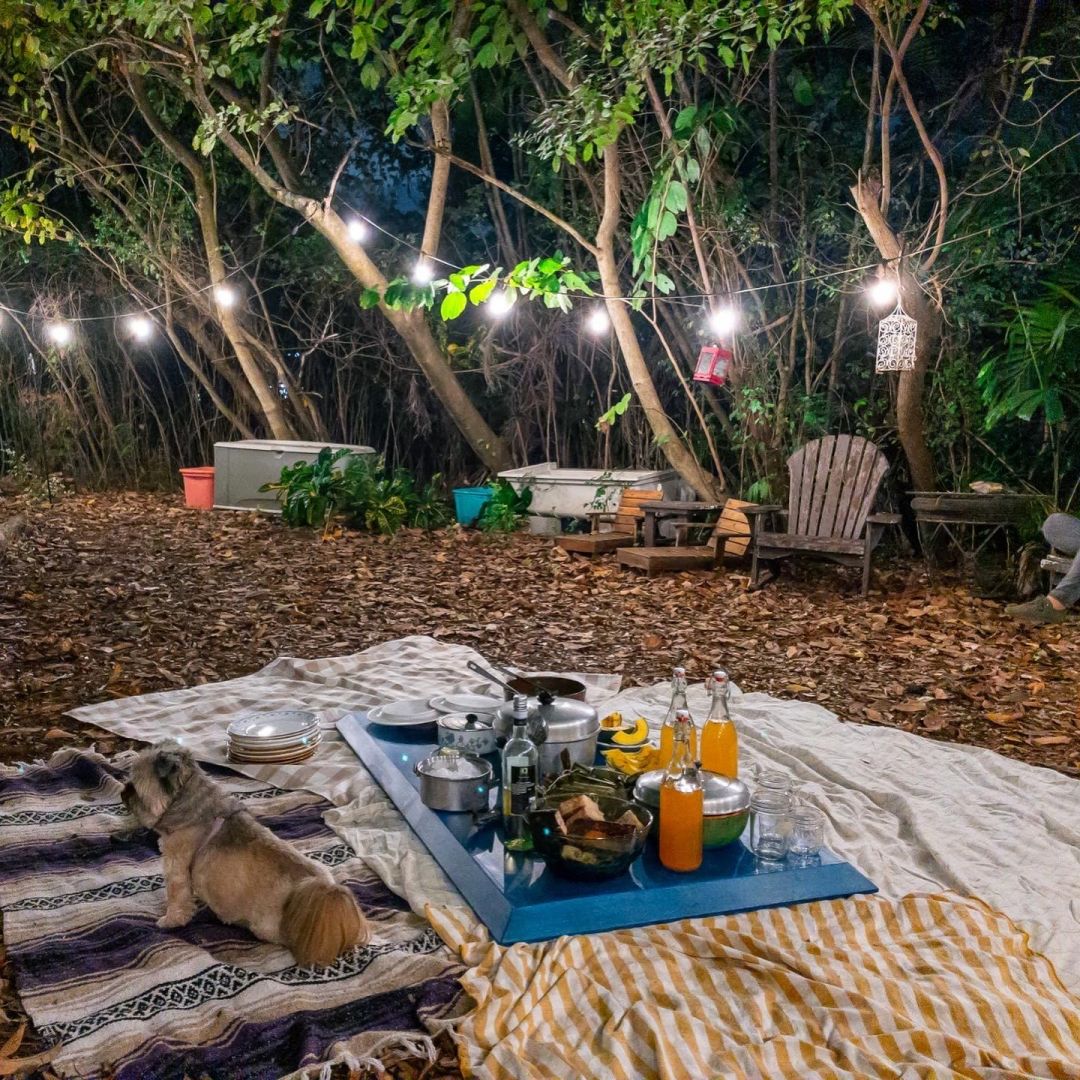
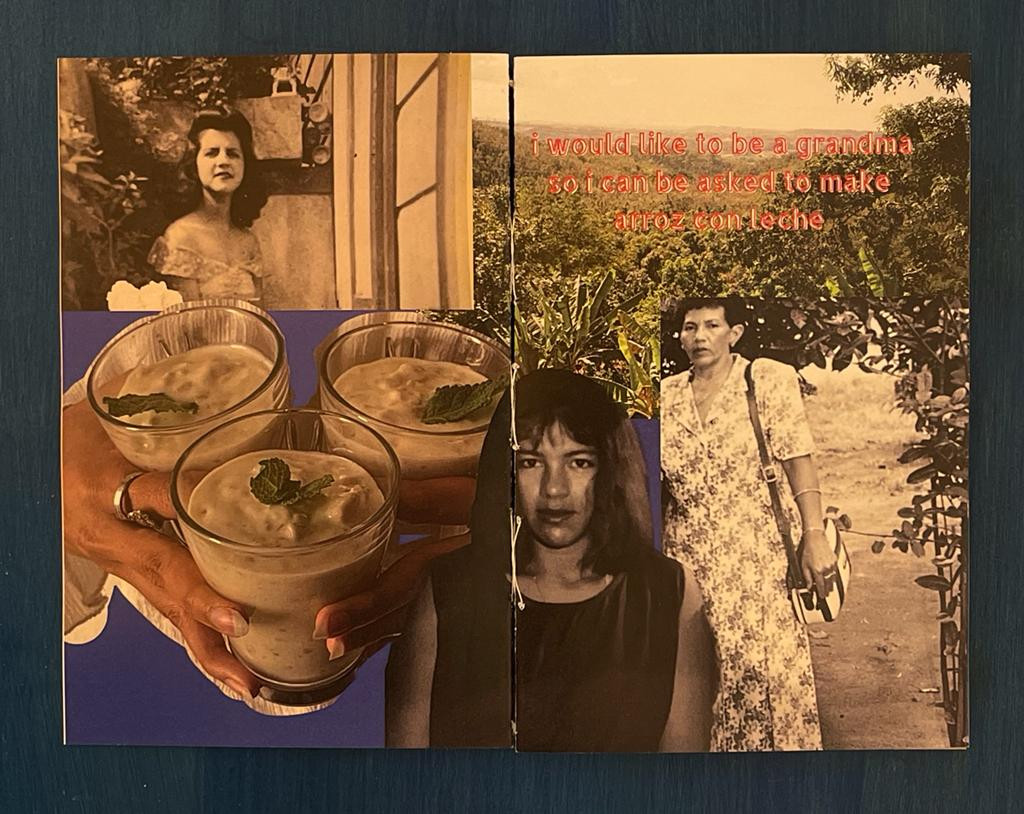
This year, the collective that I am a part of won an Ellie from Oolite Arts. Our collective is named Comedor Azul. Our project consists of a blue table that travels to different Miami communities in efforts to share, listen, and sit together. Our practice is centered on reintroducing traditional foods through the decolonization of recipes and sharing of these meals. This allows us to be in a living relationship to food– a reclaiming of Black and Indigenous food knowledge from our motherlands: Republica Dominicana, Puerto Rico, Nicaragua, and Ecuador. In 2023, we’ll be holding many more gatherings and they are all open to the public. We also released a zine that contains stories, poems and recipes. Currently, it’s being sold at Paradis Books & Bread, as well as for order through comedorazulcollective@gmail.com.
If you had a friend visiting you, what are some of the local spots you’d want to take them around to?
I love Paradis Books and Bread. We could have breakfast or go later in the day and have wine and something sweet. Maybe they’re hosting a film screening. They have been so supportive of my work. Truly, one of a kind place.
Shoutout is all about shouting out others who you feel deserve additional recognition and exposure. Who would you like to shoutout?
I would like to dedicate my shoutout to Voices of the River of Grass. They are a non-profit organization that promotes and supports Indigenous artists.
Website: amariscruzguerrero.com
Instagram: https://www.instagram.com/amariscruzguerrero/
Other: https://www.instagram.com/comedorazul/ https://www.instagram.com/lacedwithlaureles/
Image Credits
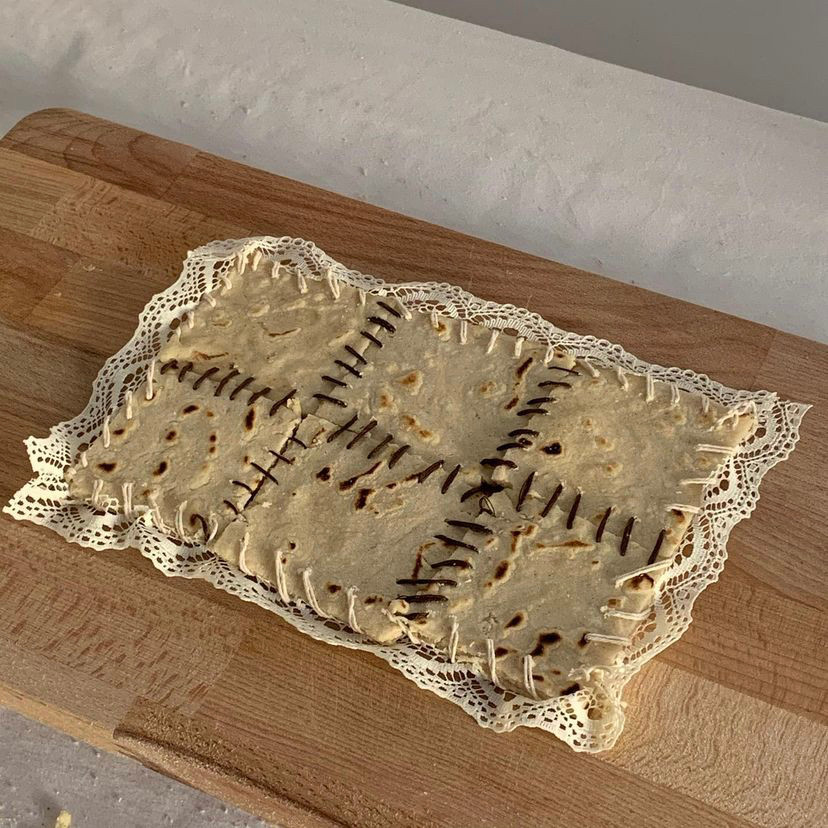
1. Desayuno de Finca, Amaris Cruz-Guerrero, 2022. 2. Comedor Azul, 2022. 3. Mi Anichi, Mi Corazón, Amaris Cruz-Guerrero, 2022. 4. Tamal y Pastel, Amaris Cruz-Guerrero, 2020. 5. My House Smells Like Chilies and Chocolate, Amaris Cruz-Guerrero, 2020. 6. Bread and Lace, Amaris Cruz-Guerrero, 2020. 7. Detail of Tamal muñequita, by Amaris Cruz-Guerrero 8. Comedor Azul Zine Vol. I, detail, 2022.


