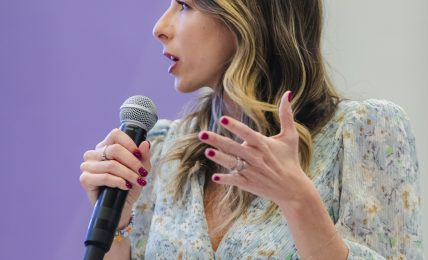
Meet Georgeta Fondos
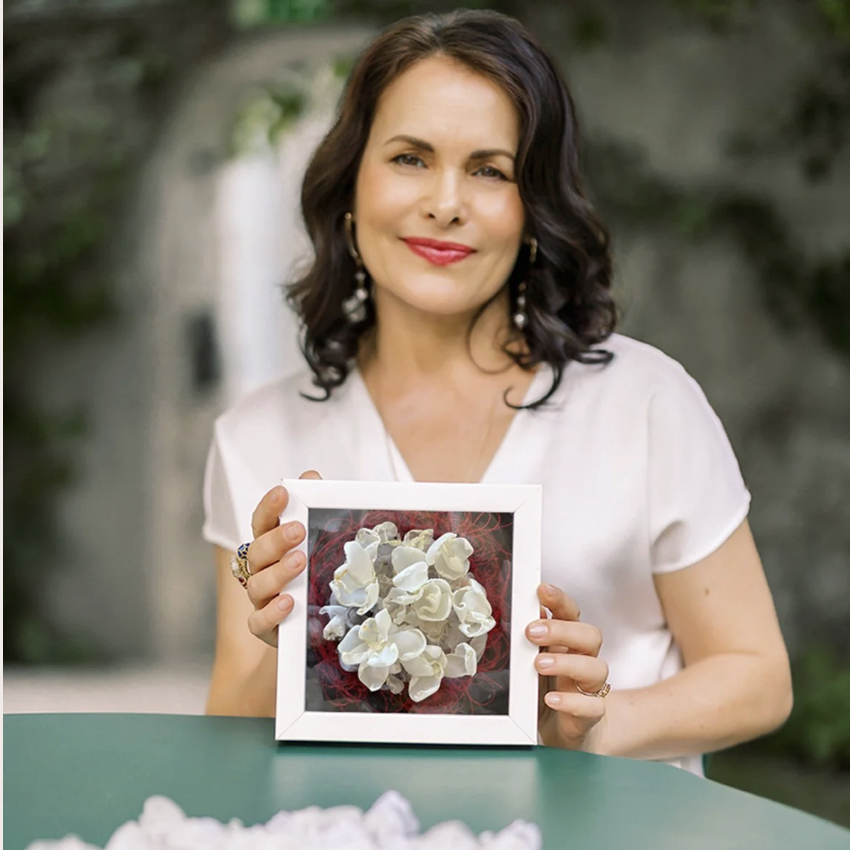


We had the good fortune of connecting with Georgeta Fondos and we’ve shared our conversation below.
Hi Georgeta, as a parent, what do you feel is the most meaningful thing you’ve done for them?
My advice to my daughter was to get a formal education from an established art school if she wanted to succeed in the creative field. Today, she is a successful entrepreneur in the beauty industry in Paris. She graduated Summa Cum Laude from the prestigious Maryland Institute College of Art (MICA), followed by a degree from the Make Up for Ever Academy in Paris with specialization in Artistic Makeup for Stage, Live Performance, and Events.
While some see makeup as just a technical trade, a formal degree in fine arts offers much more than just technical training; at MICA, she didn’t just learn “how” to apply makeup; she mastered color theory, facial anatomy, portrait drawing and painting, and art history.
Also, throughout her career, she has continued to take specialized workshops around the world. Whenever a new workshop or certification came up, it often seemed too expensive or out of reach. But I always reminded her: this is not an expense; it’s an investment in yourself and your future.
Can you open up a bit about your work and career? We’re big fans and we’d love for our community to learn more about your work.
Art has been a constant companion, staying by my side through every chapter of my life. My journey began in the countryside, immersed in the rhythms of rural life. To this day, I can still recall the distinct scent of raw wool—warm, tactile, and comforting. At the time, I had no way of knowing I would become an artist, much less one who uses fire to transform simple textiles into a form of expression. Yet, every thread I have touched, from Moldova to Florida, has led me to this moment. In my most challenging times, I turned to art for refuge. It kept me grounded, it kept me focused, and in many ways, it saved me.
My art is rooted in discipline and transformation. I was trained in a very rigorous, classical system—seven years of academic realism in the Soviet tradition. That foundation shaped the way I see, think, and build as an artist. It taught me discipline, precision, patience, and respect for craft. But at the same time, my journey has never been linear. What sets me apart is that I have always lived between two worlds—tradition and structure, experimentation and reinvention. Today, I am a multidisciplinary artist working with textiles, installation art, and large-scale murals. Throughout my career, I have received numerous awards and recognition from public art institutions. My artistic creations have found their home in public buildings, parks, museums, commercial spaces, and private collections.
For many years, mural painting became a central part of my professional life. After moving to the United States, I began working on residential projects, and in 2009, I received my first public art commission. That opportunity opened the door to years of large-scale work across South Florida, collaborating with cities, organizations, and communities. I created designs that required not only creativity but also problem-solving, communication, and the ability to bring many voices together into one visual story. But my path was not easy, and it was not always clear.
I left home at the age of 11 to attend a boarding art school, a decision that shaped both my discipline and independence at a very young age. After completing my early training, I returned to an art form that was more personal and intuitive, earning my bachelor’s degree in Textile Arts from the Academy of Music, Theatre, and Fine Arts of Moldova. At the time, I didn’t fully understand why I was drawn to textiles, but looking back, I see how deeply it was rooted in my childhood. I grew up watching my mother sew and weave during long winters—the rhythm of the loom, the texture of the threads, the quiet patience of the process. That experience stayed with me in a way I only came to understand later in life.
Along the way, I learned to move forward even when I didn’t have all the answers. In 2007, I received a scholarship from the State Foundation of Greece, which led me to study the Greek language so I could attend classes at the Athens School of Fine Arts—something that, to my surprise, wasn’t mentioned in the application. I only discovered it after arriving in Athens. Still, I embraced the challenge, as I always have. Around the same time, I received a scholarship from the Soros Center for Contemporary Art in Moldova to study English at the American Language Center. By then, I was already fluent in Romanian, my mother tongue, and Russian, and I had studied French throughout my education. But English was a dream. I was so eager to understand and speak it that I carried my book everywhere. Looking back, it feels similar to how people today scroll on their phones while waiting; for me, it was my English book.
At 34, I made another life-changing decision—to leave everything behind and move to the United States. I had to rebuild my life, adjust to a new culture, and continue developing my voice as an artist while learning English in a real, everyday way. Over time, I came to speak five languages, each one representing a different chapter of my life.
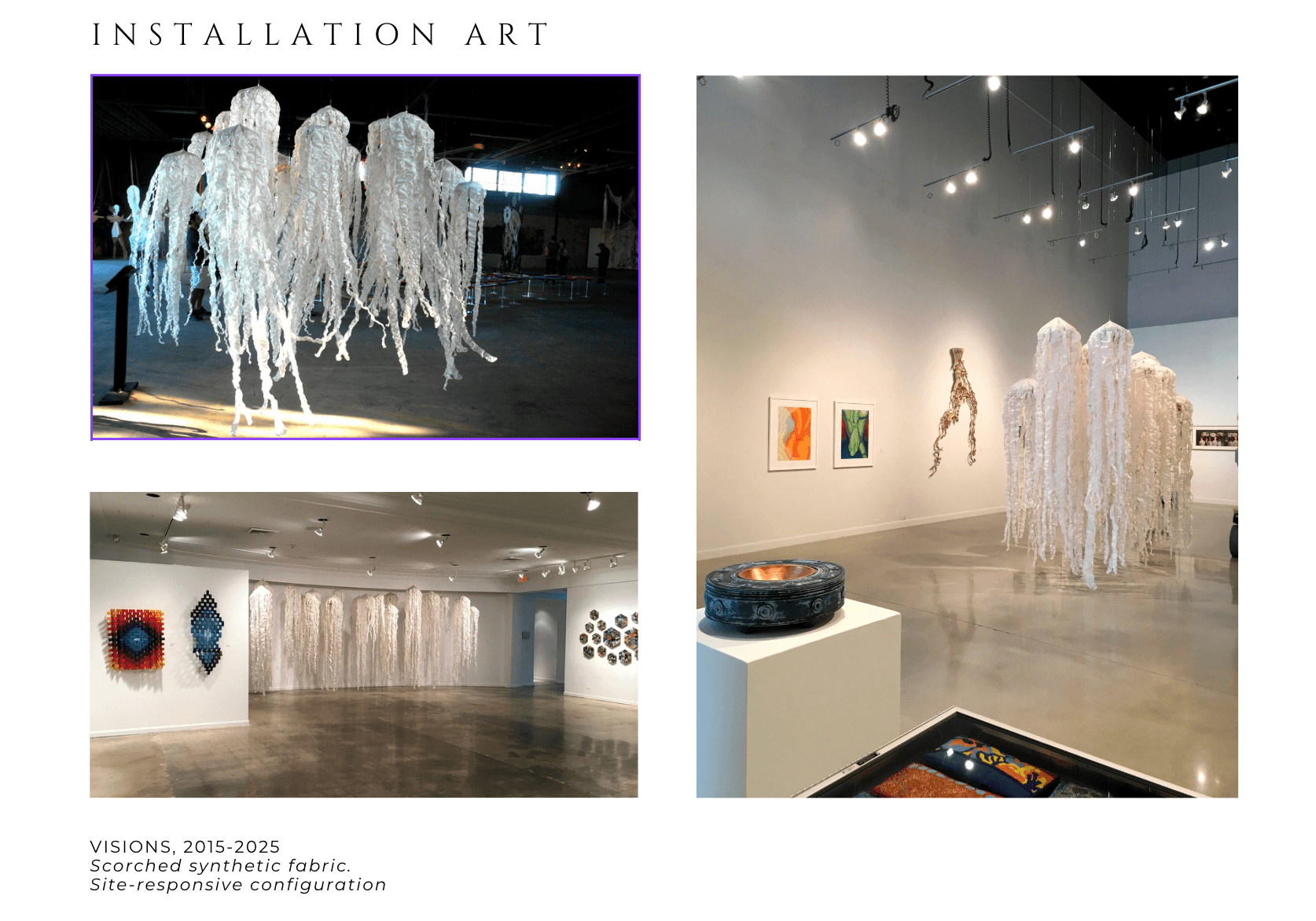
One of the most defining moments in my journey came during my master’s program in painting at Florida Atlantic University. In the middle of the program, I had a realization that changed everything: I knew how to paint, but I was not a painter; I was no longer fulfilled by it. That understanding was difficult, but it was also freeing. Instead of ignoring it, I listened. In one week, I transformed my studio. I removed everything, painted the walls white, and started over with a single material—a piece of white synthetic fabric I had brought with me from Moldova. I didn’t return to the loom or other traditional tools. Instead, I chose to experiment. That moment marked the beginning of a new direction in my work. I became drawn to simplicity, particularly to working in white and the subtle range of tones it can produce, and to the concept of transformation. My exposure to new art and ideas, especially to American contemporary art and Abstract Expressionism, pushed me to experiment.
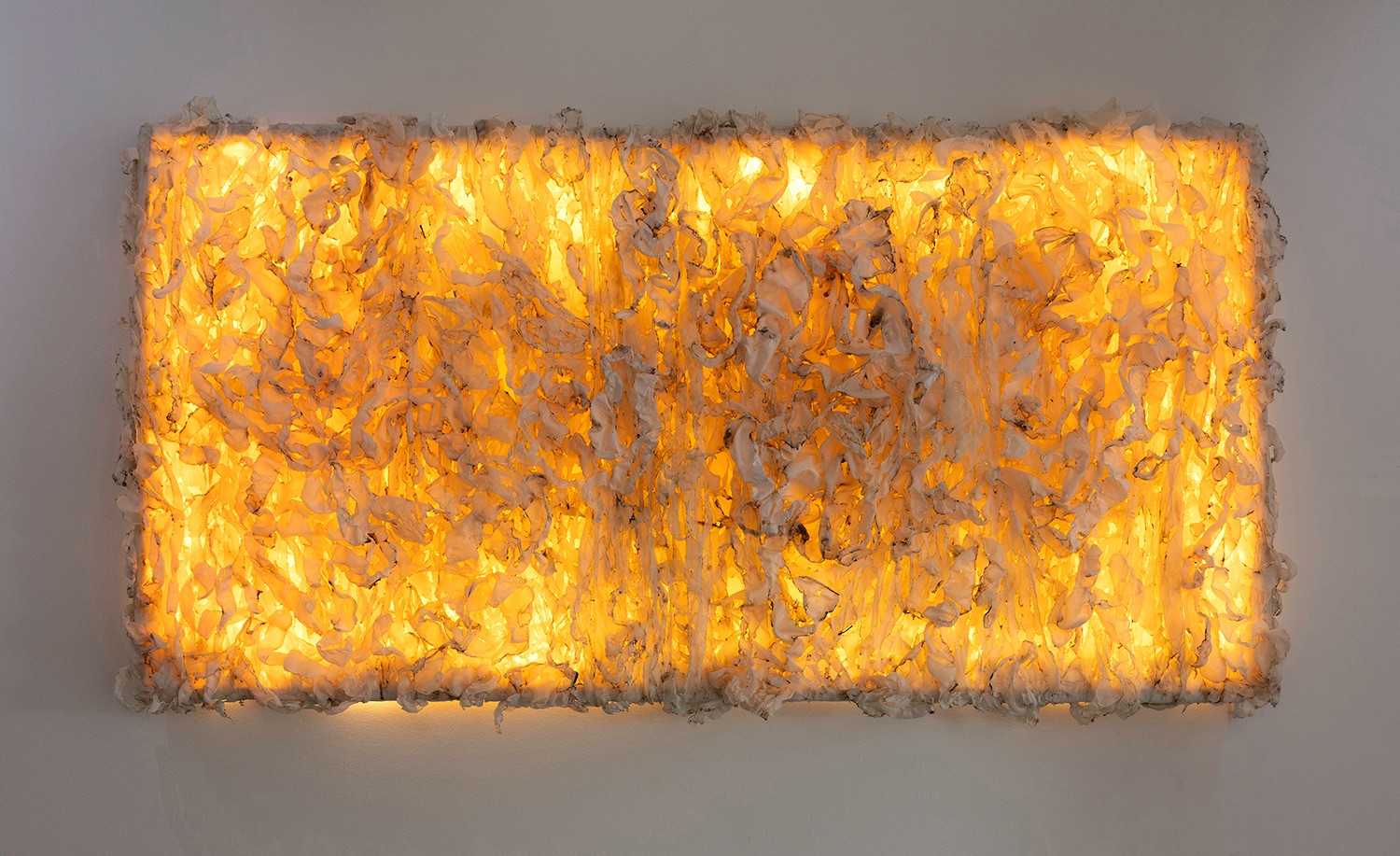
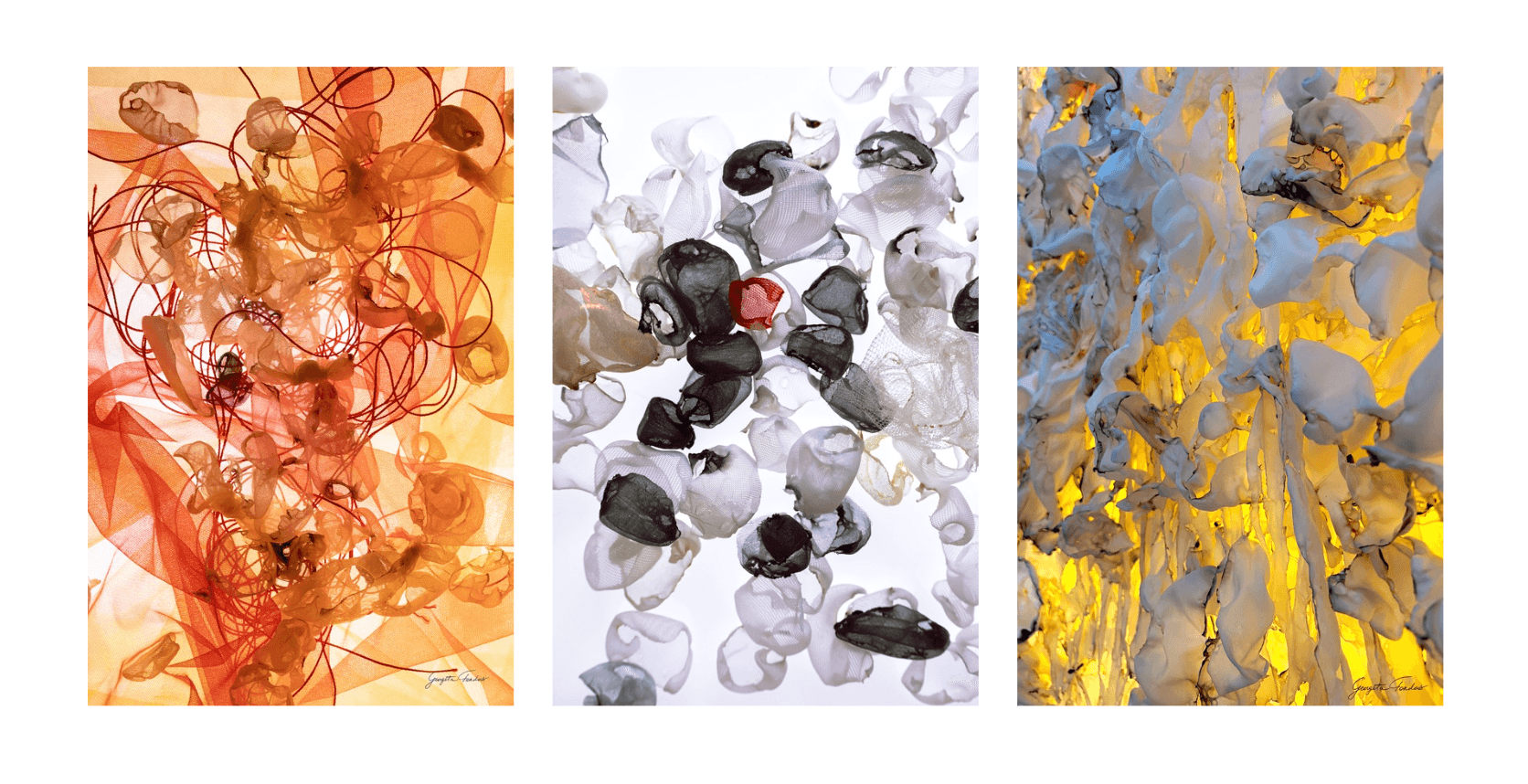
When I began using flame as a tool, I developed a process that operates on both material and conceptual levels. Synthetic fabric, unlike natural fibers, does not simply burn; it melts, contracts, and reconstitutes itself. Through this transformation, scorching becomes a method of disrupting the surface—moving beyond flatness and generating dimensional, spatial forms. For me, this process mirrors the human condition. Like flame touching cloth, our experiences leave their trace—shaping us, revealing our fragility, and forging our resilience over time. This process has become central to my artistic language. I create sculptural textile forms through the alchemy of flame, and I capture them through photography, preserving something that is both fragile and temporary. The final works, printed on materials such as acrylic or aluminum, allow the viewer to experience the textile material in a new way.
What I am most excited about today is returning to my textile art practice after many years of working on murals. This transition became possible right after completing the Helen M. Salsberg 2025 HMS Visiting Artist Fellowship Award at Palm Beach State College, where I collaborated with students and faculty to create an interactive, large-scale mural.
2025 was a particularly significant year for me, as I was also awarded an artist residency at Bailey Contemporary Arts (BaCA) and an Artist Support Grant from the Broward Cultural Division. These opportunities gave me the time and space to step away from commissioned work and embrace a more personal, exploratory process.
This period led me to reflect on how unexpectedly life unfolds and how early experiences continue to shape artistic paths. As a child, I watched my mother create handmade textiles. This practice left a deep imprint on me, and I have been drawn to textile materials in many forms throughout my life. One example of this connection came in 1991, during my college years, when I was invited to recreate a segment of a traditional Moldovan rug—very similar to the kind my mother was weaving—which is now part of the collection at the National Museum of Ethnography and Natural History of Moldova.
I am especially grateful that this piece has been preserved, as much of my early student work was lost during the Soviet period, when artworks were often retained within institutional “school funds” and never returned to the artists. I only have a few photographs of my final diploma work, which is now in a private collection in Moldova.
Now, I feel I have come full circle, bringing a new perspective to my art, shaped by years of experience. For the first time, I have begun introducing color into my textile work—sometimes through LED lighting, sometimes through carefully selected fabrics—adding a layer of vibrancy and emotional depth to the textures I create.
One of the biggest lessons I’ve learned is to trust change, even when it feels uncertain and uncomfortable. Some of the most important moments in my life came from stepping into the unknown, leaving home, moving to new countries, and changing direction in my work. None of it was easy, but each step forced me to grow. I’ve also come to understand that discipline and curiosity are not opposites, but forces that work together. My early training gave me structure, but it was my willingness to question, experiment, and let go of certainty that allowed me to evolve.
What I want the world to know about me is my story—one of persistence and transformation. I have rebuilt my life and career more than once, moving across cultures, languages, and artistic boundaries. Through all of it, I have remained committed to creating work that is honest and deeply personal. Today, I no longer create to meet expectations or solve problems for others. I create to explore, to feel, and to express what cannot be put into words. That, more than anything, defines who I am as an artist.
Let’s say your best friend was visiting the area and you wanted to show them the best time ever. Where would you take them? Give us a little itinerary – say it was a week long trip, where would you eat, drink, visit, hang out, etc.
If a close friend were visiting, I would plan a week that blends nature, art, and great food. We would start with the beaches and nearby parks, including Quiet Waters Park, with its quiet, meditative corners; the Arboretum at Constitution Park, with its intimate, garden-like setting; and Hugh Taylor Birch State Park, which offers a balance of trails and coastal nature.
I would also make sure we visit my studio at BaCA in Pompano Beach, where I am currently an artist-in-residence. From there, I would build an itinerary around some of my public works, revisiting murals such as the Dome in Rotunda and The Lauderhill Story murals at the City of Lauderhill, the interactive Be a Butterfly mural at Patch of Heaven Sanctuary in Redland, the Firefighters Mural at Fire Rescue #87 in Oakland Park, and the street murals in Riviera Beach, among others. I like to keep the schedule flexible, choosing places based on the mood of the day, but always with an emphasis on slowing down and fully experiencing each space.
Who else deserves some credit and recognition?
Question: Who deserves a little credit in your story?
I am forever grateful to my mother, who trusted my talent and sought a better life for me.
When I was 11 years old, growing up in Soviet Moldova, the primary source of information for the youth was a weekly newspaper called “The Young Leninist.” I came across an announcement about an art school, currently the renowned Liceul Academic de Arte Plastice „Igor Vieru”) located in the capital. They were accepting applications from 4th-graders. I was already in the 5th grade, but I was willing to repeat a year just for the chance to study in an art school. My mother trusted me, and she let me go. She never said the words “I love you,” but her actions said everything. Letting her child leave home so young, to chase something uncertain, took strength and selflessness. That decision changed my life.
Later, during my master’s program, I found a great mentor in my professor, Carol Prusa, whose meticulous work ethic and visionary approach I deeply admire. Through her, I began to see art as a disciplined search for something deeper. This search eventually led me to the work of Lucio Fontana. His philosophy of Spatialism—the idea of breaking through the two-dimensional canvas to see the space behind it as part of the artwork—resonated with my own frustrations with the flat surface of a canvas. When I began creating art by layering and scorching fabric, I realized that I was following a similar, Fontana-like ‘spatial’ instinct.
Website: https://www.georgetafondosartistry.com/
Instagram: https://www.instagram.com/georgetafondosartistry/
Facebook: https://www.facebook.com/georgetafondos
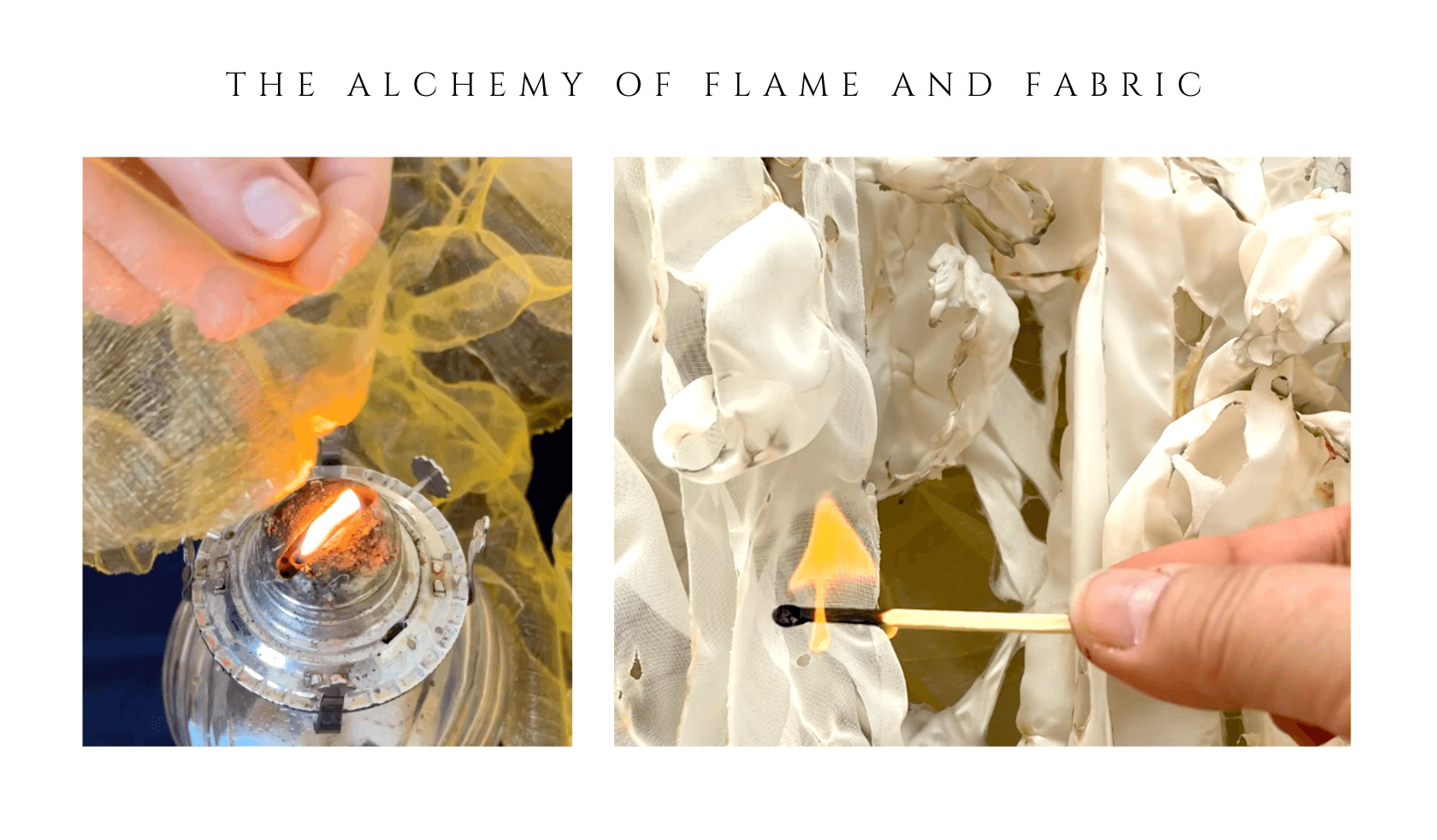
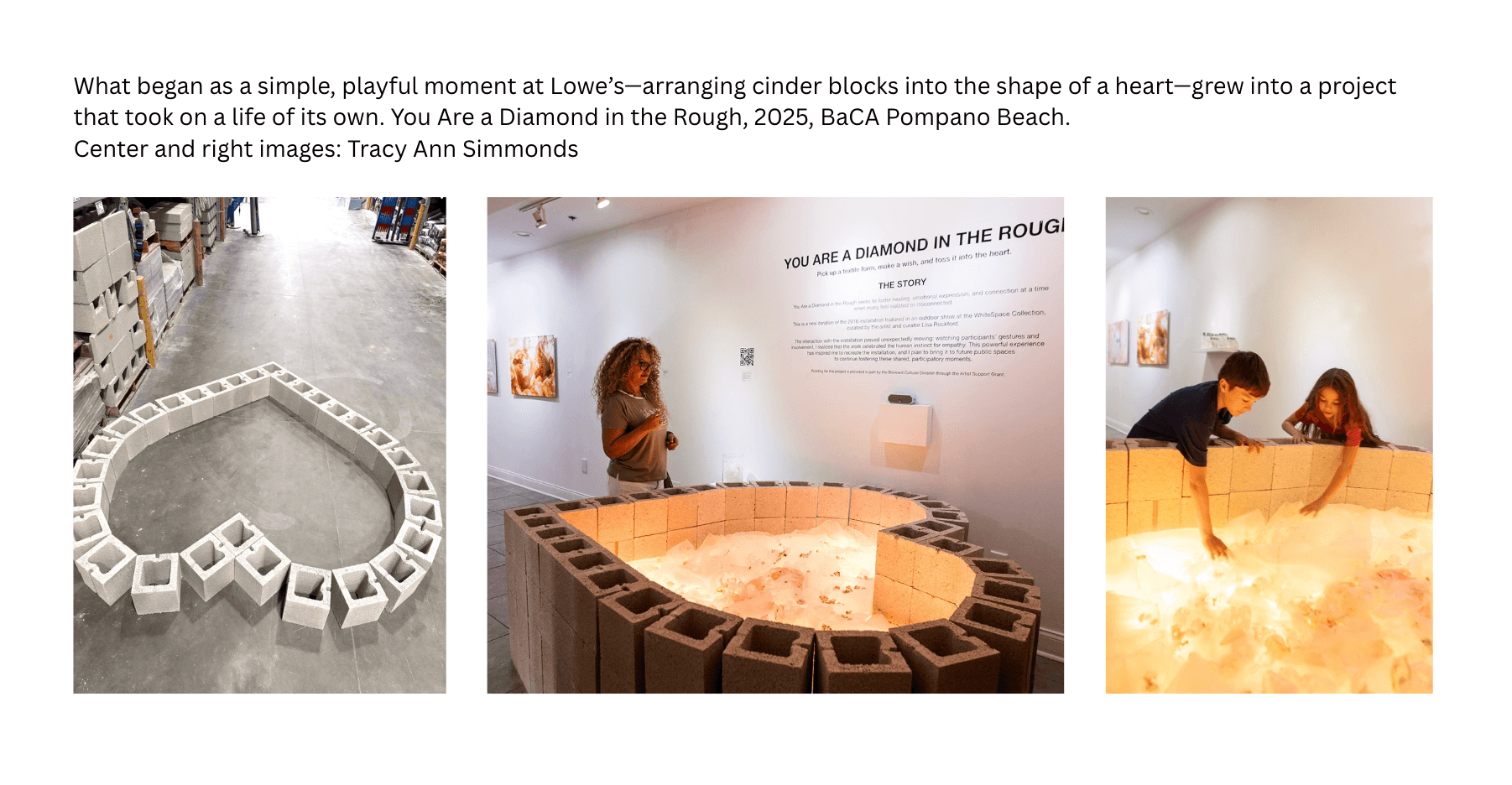
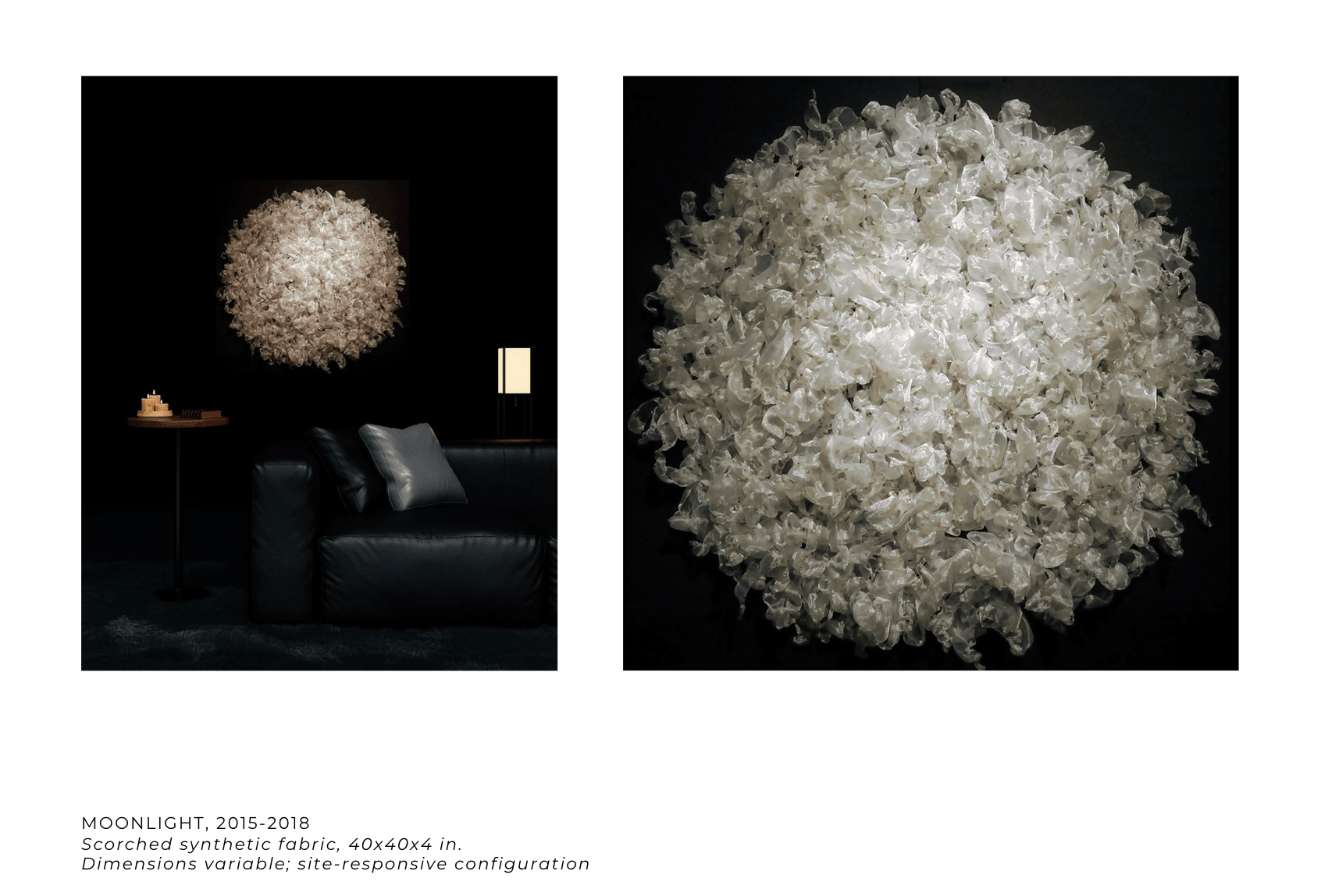
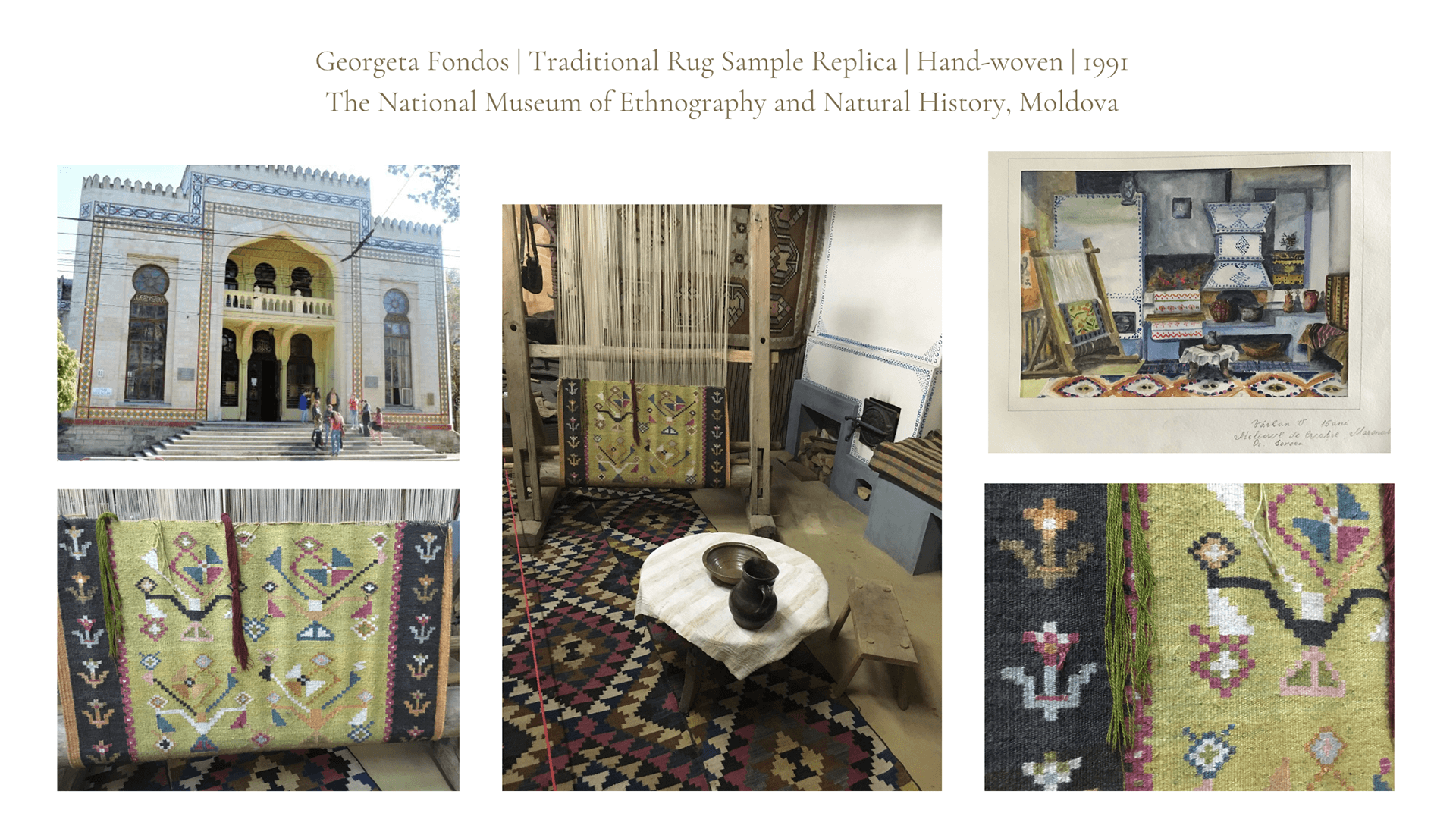
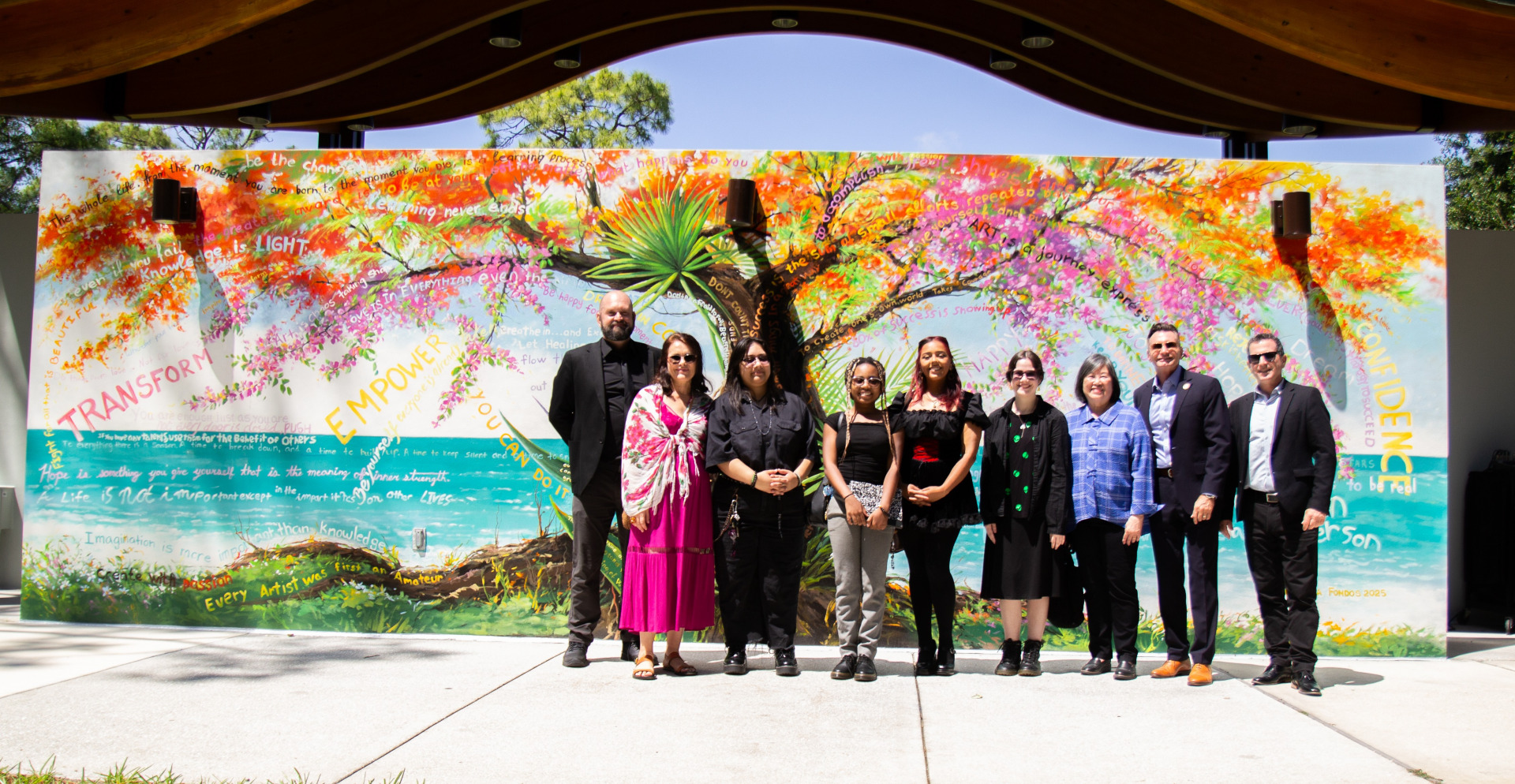
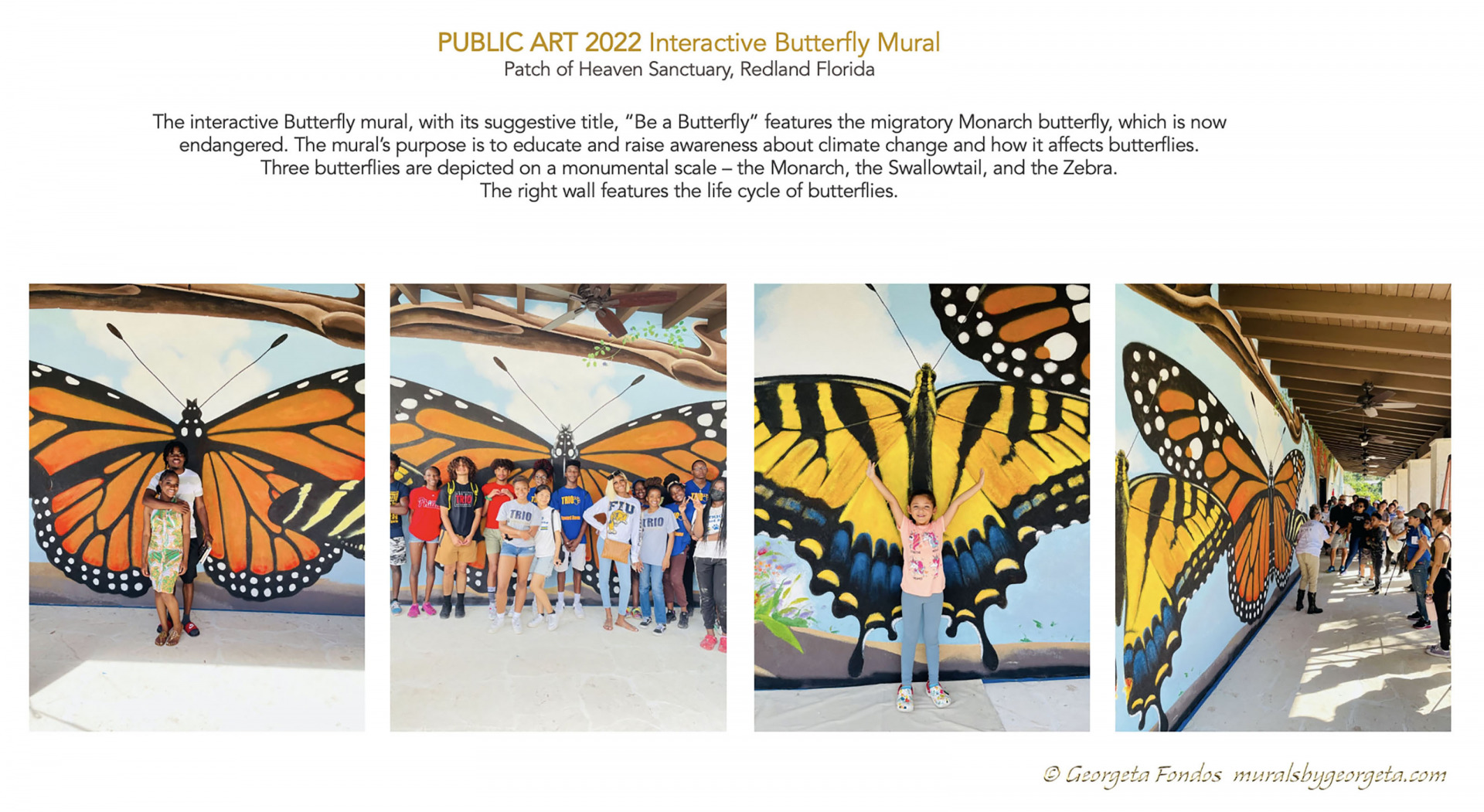
Image Credits
Personal Photo: CheyAnne Keese
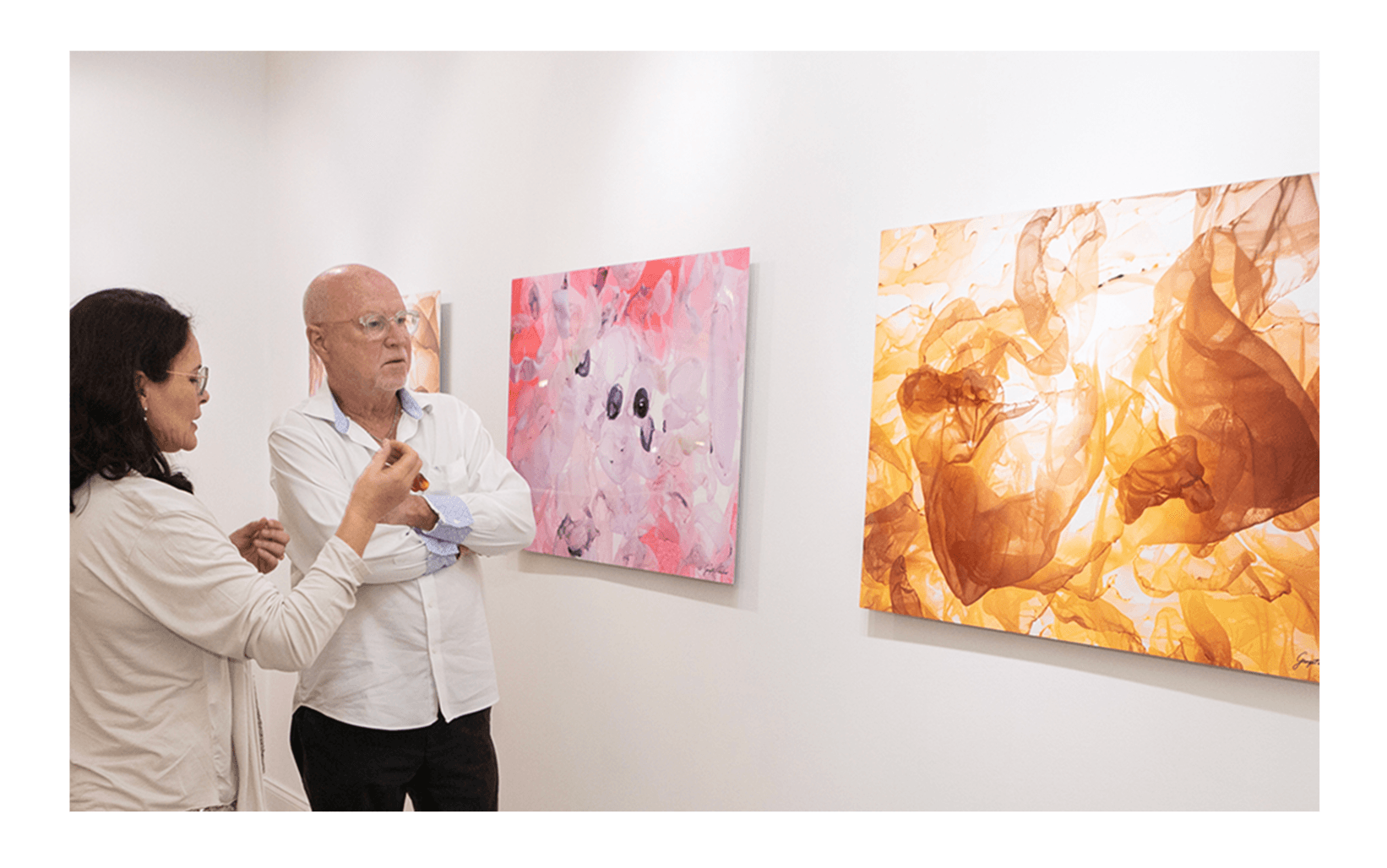
Image nr. 4 The artist in conversation with a guest – Photo: Tracy Ann Simmonds
Image nr. 6 (the heart installation, also see the text on the image) Center and right photos: Tracy Ann Simmonds
Image nr. 10 Photo Erica Cespedes (the image with the tree mural, see image title)